Kelp Ark is proud to share that Dr. Emily Aguirre, Research and Restoration Lead at Kelp Ark, has been selected as a recipient of a 2026 New Investigator Award from the U.S. Department of Energy’s Joint Genome Institute (JGI). The award supports innovative early-career researchers whose projects advance scientific understanding in areas such as bioenergy, environmental sustainability, and biotechnology.
Dr. Aguirre’s project will explore a promising new pathway for transforming kelp biomass into valuable bio-based chemicals, including alcohols and acetone, using naturally occurring microbes associated with kelp.
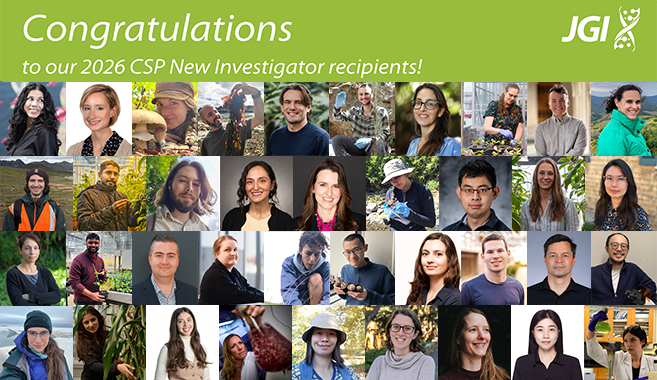
Kelp contains complex carbohydrates such as alginate, fucoidan, and other polysaccharides that make it a potentially powerful feedstock for renewable fuels and chemicals. However, converting kelp into usable products currently requires an expensive enzymatic hydrolysis step to break down these compounds before they can be fermented by bacteria such as Clostridium.
Dr. Aguirre’s research will investigate whether kelp-associated microbes already perform this breakdown naturally.
Instead of relying on costly enzyme treatments, the project aims to develop a microbial solution, a consortium of bacteria capable of degrading kelp biomass and producing fermentation-ready substrates.
The research will utilize Kelp Ark’s microbial biobank, which contains a curated collection of kelp-associated bacteria known for their ability to break down marine polysaccharides.
By combining genomics, microbiology, and fermentation science, the team will identify microbes capable of efficiently degrading kelp’s complex carbohydrates and convert them into compounds usable by industrial fermenters.
The ultimate goal is to assemble a “bacterial degradation cocktail” that could replace traditional enzymatic hydrolysis, making kelp-based bioproducts more affordable and scalable.
The project brings together expertise from Dr. Aguirre, Kelp Ark; Dr. Erin McCauley, California State University, Dominguez Hills, and University of Southern California.
Through the DOE Joint Genome Institute, the team will gain access to advanced genomic sequencing and bioinformatics tools that allow researchers to analyze microbial communities and metabolic pathways at unprecedented scale.
These resources will help identify which microbes, and which genes, play key roles in kelp degradation and bioconversion.
While Kelp Ark is best known for its work protecting and restoring kelp biodiversity, this project highlights another dimension of kelp research: unlocking the potential of kelp-associated microbes.
Advances in microbial bioconversion could support the development of sustainable fuels, green chemicals, and other bio-based materials derived from marine biomass.
About the JGI Community Science Program New Investigator Award.
The Joint Genome Institute’s Community Science Program New Investigator Award supports scientists who are leading their first major projects at JGI. Award recipients gain access to cutting-edge genomic sequencing and computational resources that accelerate discovery in bioenergy, environmental science, and microbial ecology.
Dr. Aguirre’s selection places Kelp Ark among a group of emerging researchers using genomics to tackle complex environmental and biotechnology challenges.
Learn more about the program:
https://jgi.doe.gov/user-science/science-stories/jgi-announces-2026-new-investigator-portfolio