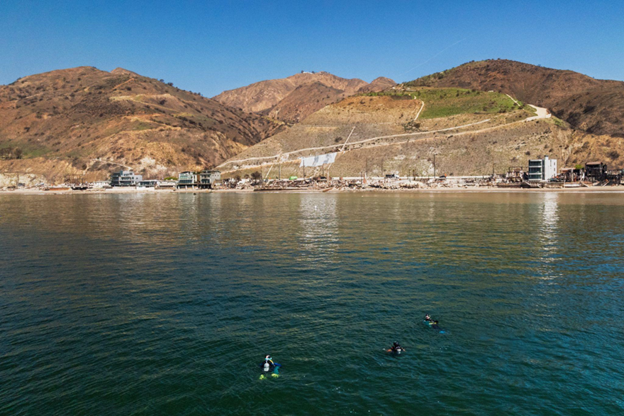
LOS ANGELES, March 2025 – January’s devastating wildfires continue to impact Angelenos lives, homes, and businesses. With two atmospheric river storm systems expected to further worsen conditions, the effects of these two back-to-back events will have a significant impact on the coastal ecosystems in Malibu and the Pacific Palisades.
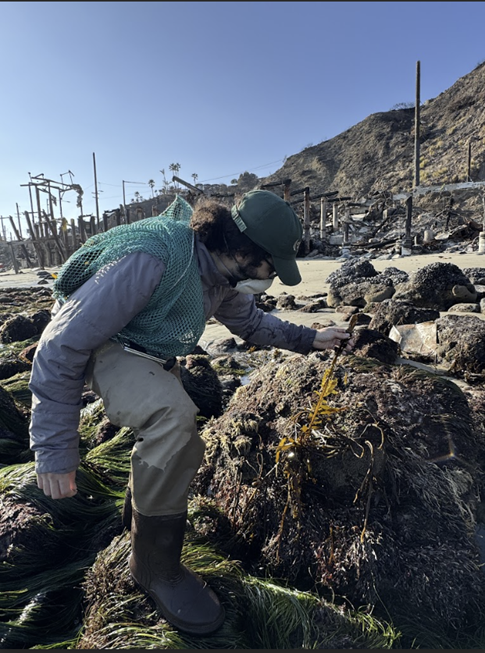
In response, Kelp Ark has launched an urgent initiative to preserve the genetic diversity of threatened kelp forests. Collaborating with partners from Heal the Bay, and the University of Southern California (USC), scientists are working to collect and safeguard kelp species affected by the coastal pollution caused by runoff in the fire ravaged areas of Santa Monica Bay.
The wildfires’ devastating effect extended past the land into the ocean through the spread of ash, debris, and toxins like arsenic, which has been found to be extremely harmful to coastal ecosystems. The coming rains exacerbates the problem, sending toxins and debris downriver into the coastal environment, blocking sunlight, and promoting the growth of harmful algal blooms – all of which contribute to the die-off of kelp forests. Kelp Ark’s efforts ensure that impacted populations are safeguarded in a biobank which can then be used to restore populations when conditions improve.
“As communities come together to help people recover from the incredible devastation these fires caused, we are focusing our efforts on rescuing various species from local kelp ecosystems that are at risk of being eliminated due to the toxic chemicals that are entering the ocean,” said Kelp Ark Director Dr. Charles Yarish, Kelp Ark Director and University of Connecticut professor emeritus. “The kelp species found along Southern California represent some of the most productive ecosystems in the eastern Pacific Ocean. It is critical that they are preserved.”
Kelp forests are vital to the overall health of the ocean. They serve as the foundation for many marine ecosystems, providing food, shelter, and breeding grounds for many marine species, including fish and sea otters. Kelp forests also absorb carbon dioxide and produce oxygen, making them one of the most efficient natural carbon sinks. Kelp is also widely used in the food, pharmaceutical, and cosmetic industries. The destruction of kelp forests could have cascading effects on marine life, fisheries, and coastal economies, making their preservation essential for ecological and human well-being alike.
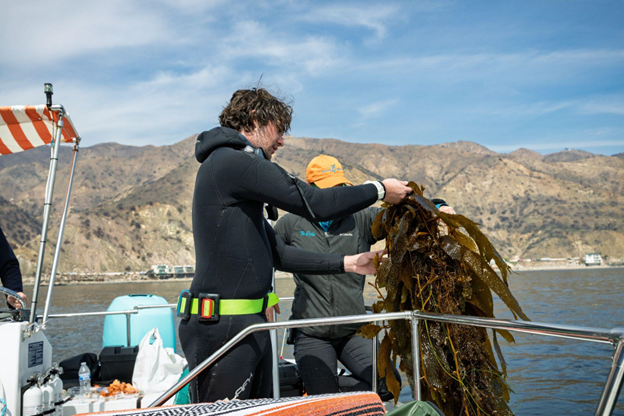
The rescued kelp will be housed at Kelp Ark’s state-of-the-art biobank located at AltaSea, a 35-acre campus that is the nation’s leading destination for the blue economy. This will ensure that the kelp will be maintained under controlled conditions to safeguard their genetic material in tandem with their microbiome for future reintroduction efforts.
Kelp Ark has already successfully introduced material from 17 specimens into the biobank and has over 80 kelps kept in conditions to induce reproductivity in their aquaculture systems. Kelp Ark, in collaboration with the University of Southern California (USC), University of Wisconsin, Milwaukee (UW-Milwaukee) and University of California-Santa Barbara (UCSB), has already banked 12 species of kelp and over 2,600 genetically distinct strains and has pioneered the biobanking of unique microbes associated with the kelps.
“We are grateful to the California Department of Fish and Wildlife for expeditiously authorizing this work and for the financial support of the Grantham Foundation for the Protection of the Environment,” said Dr. Nuzhdin, founder and CEO of Kelp Ark. “We also want to thank USC’s Bernadeth Tolentino, Declan Bulwa, Sedona Silva, Sophia Lee, and Patrick Villanueva; Heal the Bay’s Laura Rink and Jenifer Berney; and the Dolphin Boat Captain Joey Broyles and his crew Taylor Collins for their help in accomplishing this.”