
Our Programs
We support a living future for marine biodiversity—one preserved strain, one field trial, one collaboration at a time. Here’s how we do it:
Biobanking
Kelp: Conservation through Collection
We collect, authenticate, preserve, and distribute natural macroalgal germplasm—the reproductive material that underpins the survival and evolution of kelp ecosystems. Through rigorous field collection, taxonomic verification, and controlled laboratory processing, each accession is curated to ensure genetic integrity, traceability, and long-term viability for research and restoration use.
Our biobank represents one of the most comprehensive kelp germplasm collections globally. It includes rare and legacy specimens preserved for nearly 50 years alongside newly acquired material that reflects current environmental conditions and emerging ecological pressures. This temporal depth enables researchers to study genetic change over time, supporting insights into adaptation, resilience, and climate response.
With 12 species currently represented, each sample contributes to a growing genetic library that serves as critical infrastructure for marine science. These collections enable a wide range of applications—from selective breeding and cultivation optimization to ecosystem restoration and biodiversity conservation. By safeguarding genetic diversity at the population and species level, we help ensure that kelp forests retain the adaptive capacity needed to withstand warming oceans, disease, and other stressors.
Our primary geographic focus is on species native to the Eastern Pacific coastline, where kelp forests form one of the most productive and ecologically important marine habitats on Earth. These underwater forests provide shelter, food, and nursery grounds for hundreds of species, while also buffering coastlines, sequestering carbon, and supporting fisheries and coastal economies.
As part of our mission, we make curated germplasm accessible to academic institutions, restoration practitioners, and responsible aquaculture partners. Through this work, we aim to accelerate scientific discovery, strengthen restoration outcomes, and build a resilient, shared genetic foundation for the future of kelp ecosystems worldwide.
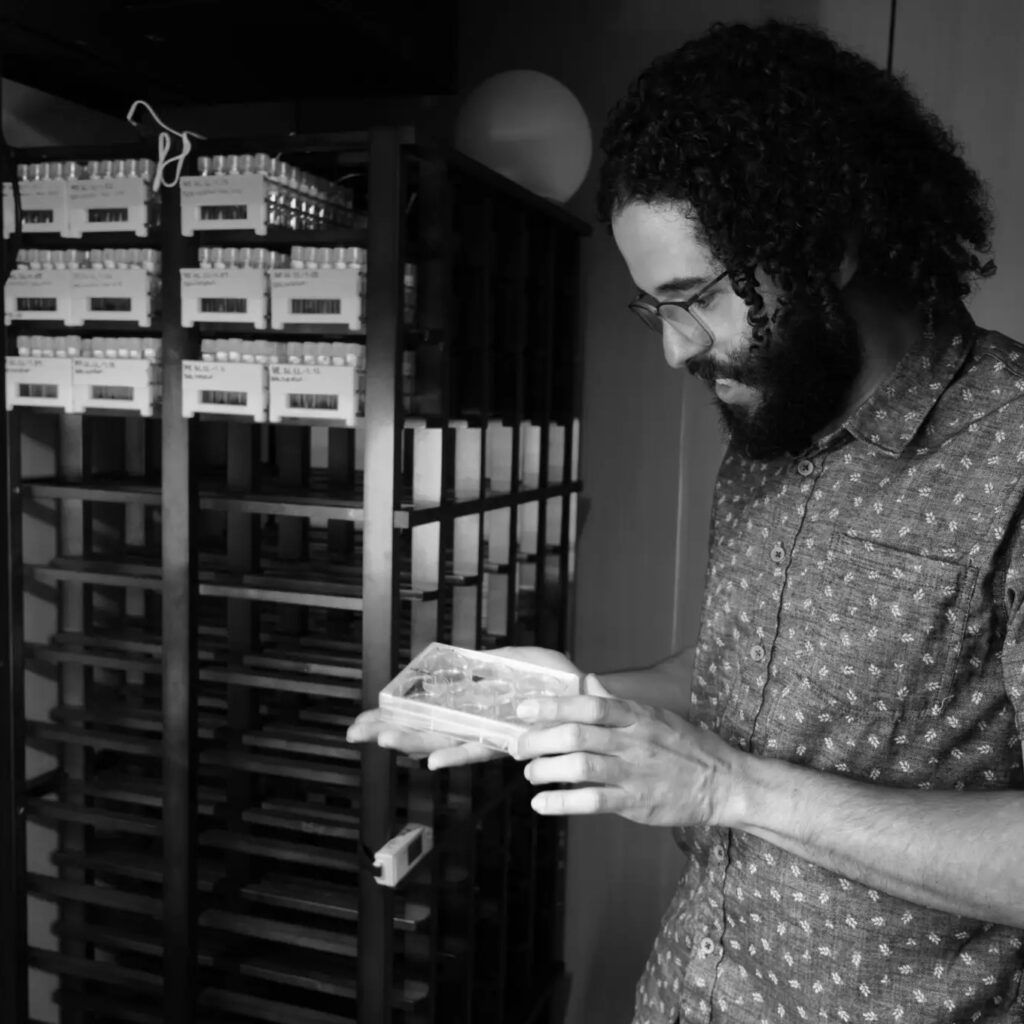
Microbial: Preserving the unseen partnerships
Kelp health and performance are fundamentally shaped by complex associations with microbial and fungal communities. These symbiotic partners regulate key physiological functions—including nutrient acquisition, growth, morphogenesis, and defense—forming an integrated biological system often referred to as the kelp holobiont. Preserving kelp without its microbial context risks losing critical components of its resilience and ecological function.
Our biobanking program extends beyond macroalgal germplasm to include the isolation, characterization, and preservation of associated bacteria, fungi, and other microorganisms. Through targeted sampling, culture-based and molecular identification methods, and controlled cryopreservation, we curate microbial strains that play essential roles in kelp health and environmental adaptation.
We prioritize symbionts linked to stress tolerance and disease resistance, including microbes associated with thermal resilience, pathogen inhibition, and recovery from environmental disturbance. By maintaining these functional partners alongside host germplasm, we enable more effective restoration strategies and more accurate experimental systems—ensuring that kelp is studied and deployed as a living, interactive system rather than an isolated organism.
This growing microbial library supports a range of applications, from microbiome-informed aquaculture practices to the development of probiotic treatments for kelp cultivation and restoration. It also provides a platform for advancing fundamental research into host–microbe interactions, co-evolution, and ecosystem-level responses to climate change.
By capturing and preserving these invisible yet indispensable partnerships, we are safeguarding not only the genetic foundation of kelp, but also the biological networks that sustain its productivity, resilience, and role in marine ecosystems.
Research and Innovation
Research
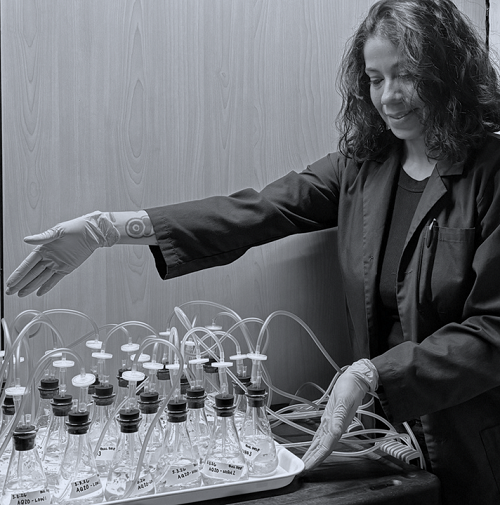
Kelp Ark partners with industry leaders, restoration practitioners, and academic institutions to advance seaweed science, conservation, and applied aquaculture. Our research integrates macroalgal genetics with microbial ecology to develop scalable solutions that strengthen biodiversity, resilience, and performance across kelp systems.
We focus on the improvement and optimization of seedstock development, maintenance, and deployment—ensuring that both genetic and microbiome diversity are conserved and functionally supported. By bridging foundational research with applied outcomes, our work is designed to translate directly into restoration success and cultivation efficiency.
Our current and ongoing research initiatives include:
– Identification and functional characterization of beneficial microbes associated with kelp seedstocks, with emphasis on growth promotion, stress tolerance, and disease resistance
– Development of targeted probiotic consortia to support early life-stage development and improve survivorship in cultivation and outplanting
– Engineering of microbial consortia for alginate biodegradation, enabling circular processing pathways and novel bioproduct applications
– Advancement of strain identification platforms, including MALDI-TOF and DNA sequencing workflows, to ensure accurate, scalable, and reproducible microbial and algal characterization (in collaboration with the McCauley Lab at CSU Dominguez Hills)
– Optimization of seedstock culture media to preserve microbial diversity while maintaining gametophyte health and genetic integrity
– Development of sporeless kelp lines to improve cultivation control and biosecurity (in collaboration with the Nuzhdin Lab at USC)
– Selective breeding programs targeting traits such as growth rate, thermal tolerance, and structural resilience
– Refinement of spore induction techniques to increase reliability and scalability of seedstock production
Across all programs, we prioritize approaches that integrate host genetics with microbiome function—recognizing that kelp performance emerges from these interconnected systems. From selective breeding to microbiome-informed cultivation strategies, our goal is to generate solutions that are both scientifically robust and operationally viable.
We actively seek collaborations and sponsorships to expand this work and accelerate impact. By aligning research with real-world deployment, we aim to support the restoration of kelp forests and the responsible growth of the global seaweed industry.
Publications
Chancellor, J.L., Churches, N., Aguirre, E. et al. Assessing the effects of ocean acidification on larval Mediterranean mussels (Mytilus galloprovincialis) and California mussels (Mytilus californianus): growth, survival, and microbiome community composition. Discov Oceans 2, 72 (2025). https://doi.org/10.1007/s44289-025-00112-2
Aguirre, E.G., Fine, M.J., Xiang, T. et al. Symbiodiniaceae-Roseibium exhibit synergistic growth effects without B12 supplementation. Discov Oceans 2, 71 (2025). https://doi.org/10.1007/s44289-025-00110-4
Harden, M., Kovalev, M., Molano, G., Yorke, C., Miller, R., Reed, D., Alberto, F., Koos, D. S., Lansford, R., & Nuzhdin, S. (2024). Heat stress analysis suggests a genetic basis for tolerance in macrocystis pyrifera across developmental stages. Communications Biology, 7(1). https://doi.org/10.1038/s42003-024-06800-7
Aguirre, E. G., & Schwartzman, J. A. (2024). Metagenome-assembled genomes of macrocystis-associated bacteria. Microbiology Resource Announcements, 13(11). https://doi.org/10.1128/mra.00715-24
Schenk, S., Steell, S. C., Schuster, J. M., Zhou, L., Coleman, L., Smith, J., Parfrey, L. W., & Aguirre, E. G. (2026). Conserving marine biodiversity in the North American Pacific: Biobanking macroalgae and their associated microbiome. In Advances in temperate phyconomy: Algal harvest and cultivation in globally distributed temperate waters: Part I (pp. 401–422). Springer Nature Switzerland.
Kovalev, M., K. Allen, B. Vong, Z. El Kharousy, S., Nuzhdin, M. Roleda and S. Fahrenkrug. Global farming of Kappaphycus alvarezii relies on a single monoculture. Nature Sustainability. (in review)
Outreach and Education
Discover, Learn, Protect
Kelp Ark engages diverse audiences through hands-on experiences, public programming, and professional engagement designed to inspire curiosity, deepen understanding, and foster stewardship of kelp ecosystems. Our outreach initiatives translate complex science into accessible, meaningful experiences—connecting communities to the ecological, economic, and cultural importance of kelp.
Our Giant Kelp Clusters series serves as a cornerstone of this effort, inviting participants to explore a focused kelp topic each month through interactive learning and direct engagement. These sessions highlight the critical role of kelp forests in coastal resilience, biodiversity support, and climate mitigation, while also addressing the opportunities and challenges of kelp farming and restoration in a rapidly changing ocean.
Beyond our own programming, we actively participate in conferences, workshops, and community events—engaging with kelp farmers, restoration practitioners, researchers, policymakers, and the broader public. Through tabling, presentations, and collaborative forums, we facilitate knowledge exchange, strengthen cross-sector relationships, and elevate emerging best practices in marine conservation and aquaculture.
Our outreach model emphasizes capacity-building as much as education. Participants and trainees leave not only with foundational knowledge, but with practical tools, scientific context, and a clear sense of purpose. Whether supporting early-career professionals, community members, or industry partners, we aim to cultivate a network of informed practitioners equipped to advance kelp restoration, responsible aquaculture, and ocean stewardship.
By integrating education with active research and conservation efforts, Kelp Ark ensures that knowledge is not only shared—but applied—amplifying impact across ecosystems and communities.
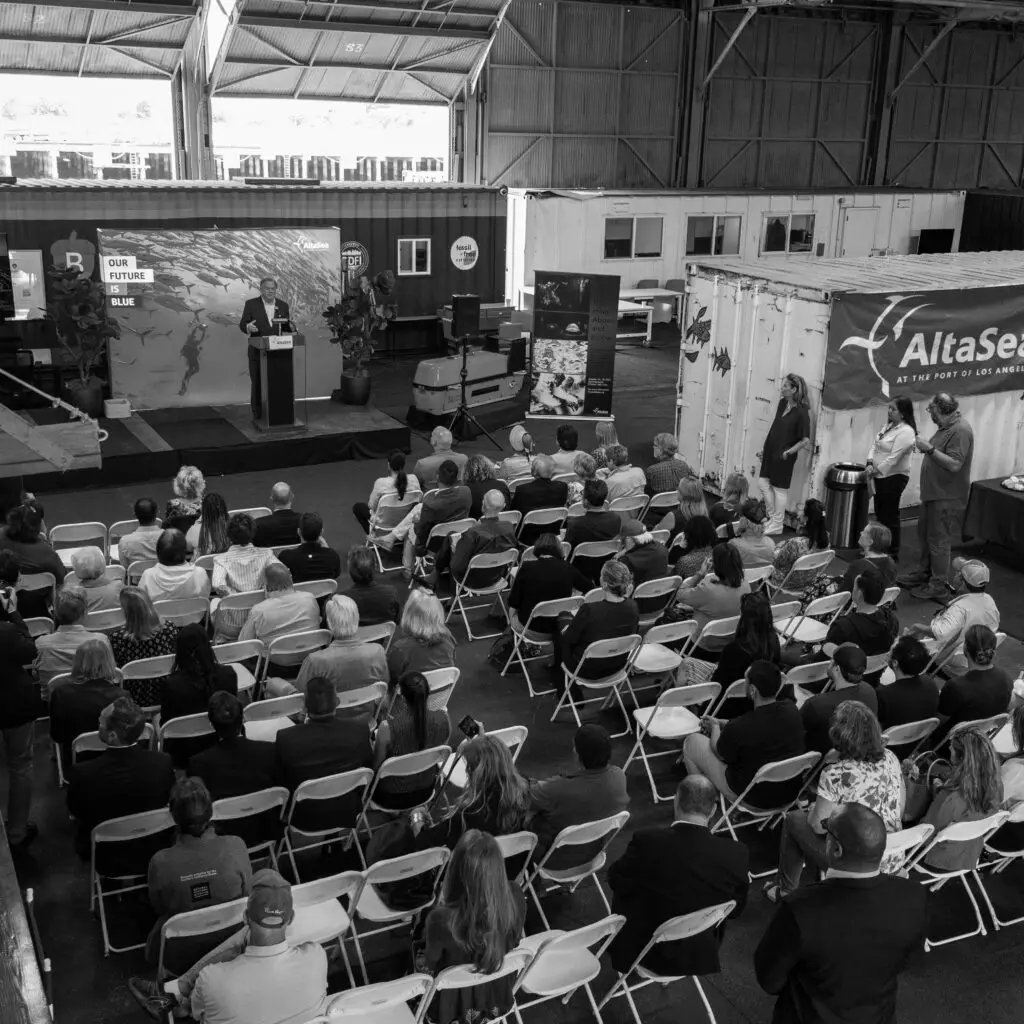
Education and Training
Learning programs, fieldwork, curriculum
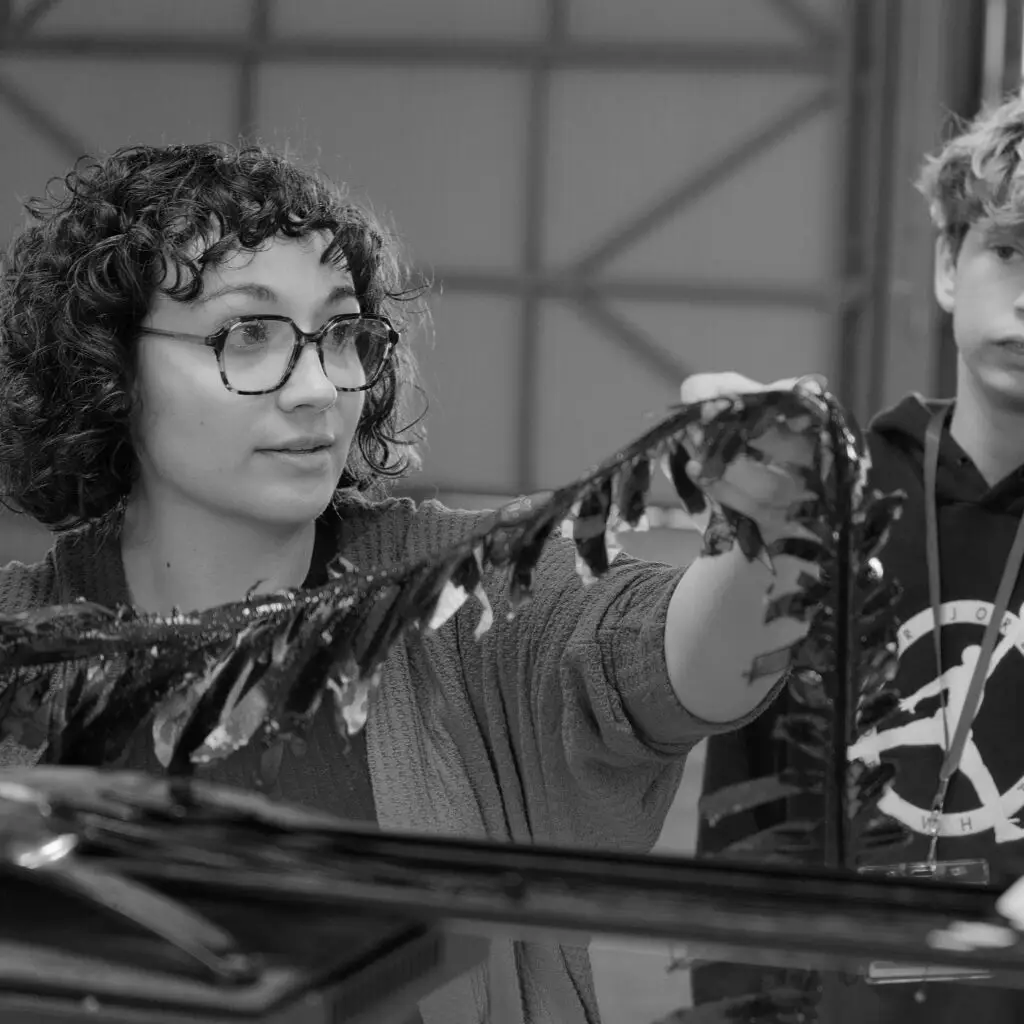
Kelp Ark delivers structured, hands-on learning experiences that span the full educational pipeline—from K–12 students to university trainees and postgraduate researchers. Our programs are designed to build practical skills, scientific literacy, and career pathways in marine science, conservation, and sustainable aquaculture.
Participants engage directly with active research and operational systems, gaining exposure to both laboratory and field-based methodologies. Educational experiences include kelp culturing techniques, genome mapping and genetic analysis, microbiome science, and site visits to our offshore aquaculture infrastructure. Through this immersive approach, learners develop a working understanding of kelp as both a model organism and a critical component of marine ecosystems.
As part of the broader blue economy ecosystem, Kelp Ark also participates in AltaSea-hosted site tours, situating our work within a larger network of ocean innovation, sustainability, and workforce development. This integration provides learners with valuable context on how science, industry, and policy intersect in real-world applications.
Our training model emphasizes applied learning and professional development. Students and trainees are not only introduced to core scientific concepts, but also to the tools, protocols, and systems used in contemporary research and aquaculture operations. This prepares participants to transition effectively into academic, technical, or industry roles.
Graduates of our programs leave with more than knowledge—they gain practical competencies, interdisciplinary perspective, and a clear sense of purpose, equipped to contribute to the advancement of marine conservation and the sustainable growth of the global seaweed sector.
FAQ
What is a biobank?
A biobank is a living archive — a secure collection of genetic material preserved for future use. At KelpArk, that means seaweed strains, microbes, and fungi stored to support research, restoration, and sustainable aquaculture.
Why focus on seaweed?
Seaweeds are biodiversity powerhouses. They capture carbon, support fisheries, protect coastlines, and drive entire ecosystems. Preserving their genetics is critical for climate resilience and global food security.
How is KelpArk different from other conservation groups?
Land crops have more than 1,300 seed banks worldwide. Before KelpArk, the ocean had none. We are the first dedicated biobank for seaweed biodiversity, combining genetics, microbial research, and restoration partnerships.
Who can access the biobank?
Researchers, restoration projects, aquaculture ventures, and approved partners can request access through our secure portal. Access is guided by principles of equity, transparency, and responsible use.
Do you genetically engineer kelp?
No. Our focus is on selection, not engineering. We identify and preserve naturally resilient strains that thrive under environmental pressures.
Where is KelpArk located?
Our facilities and biobank are based in San Pedro California, with partnerships that extend globally through universities, NGOs, and restoration groups.
How can I support KelpArk?
You can contribute by donating, adopting a kelp, or partnering with us on restoration or research. Every contribution helps preserve biodiversity for the ocean’s future.
Why is biobanking urgent now?
Kelp forests are disappearing at unprecedented rates due to warming oceans, pollution, and habitat loss. Without preservation, their genetic diversity could be lost forever. Biobanking today ensures we have the tools to restore and rebuild tomorrow.
Support KelpArk
Together, we can turn biodiversity into resilience. From restoration to research, our services are designed to help you make lasting impact for the ocean’s future.